
Beziers town – a little history
Beziers was actually founded by Greek migrants in around 575 BC, making it one of the oldest cities in France. Since then it has enjoyed and suffered a chequered history over the centuries that includes two massacres, a constant influx of different migrants, and a lot of wine!
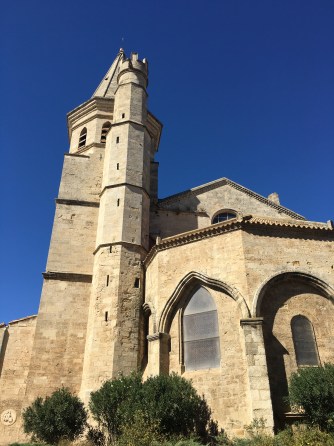
Occupied since Neolithic times, it was settled by Celts and then the Romans, who originally knew it as Betarra a town on the road linking Provence with the Iberian Peninsula, later developing a settlement for veterans and re-naming it Colonia.
“I am a wine from Baeterrae and I am five years old” (found on a bottle in excavations near Rome.)
After a fleeting occupation by the moors in the 8th century, Beziers established itself as an important medieval city. In 1169, the city suffered its first massacre at the hands of Aragonese and Catalans troops led by Viscount of Béziers, Roger II Trencaval in retaliation for the inhabitants’ betrayal and support for the Raymond V of Toulouse.
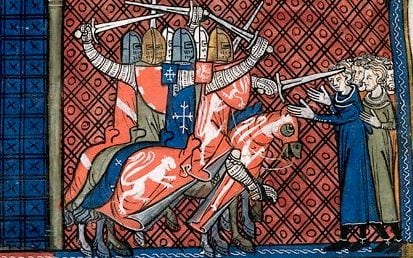 The city found itself on the wrong side of history again just forty years later. It had become a centre of the Cathar movement which held the heretical belief that there were two gods, good and evil. Pope Innocent III declared a crusade to drive Catharism from Languedoc and sent Arnaud Amaury, the Cistercian abbot to lead an army against them. The city was overrun before the siege had hardly begun and the inhabitants – Catholics and Cathars alike – were slaughtered, even as they took refuge in the churches and cathedral. Amaury distinguished himself, when asked how the crusaders could distinguish between heretics and the innocent Catholics:
“Kill them all,” he said, “The Lord will recognise his own!”
7,000 inhabitants were killed.
Things could only look up after that, and Beziers also boasts some great cultural icons: Matfre Ermengaud the author of the longest medieval poem “Breviari d’amor” at 35,000 verses; Pierre Paul Riquet the architect of the Canal du Midi, born here on the 29th of June 1609.
But continuing on from the Romans, and despite the best efforts of the Moors, who destroyed the vines in the 8th century, Beziers is above all at the centre of French wine production. From Corbieres to Minervois, from Faugeres to Saint Chinian, the town is surrounded by some of France’s oldest and most interesting grape varieties, and by the 19th century it was Languedoc’s undisputed viticultural capital.
So close to the Iberian peninsula, it is perhaps inevitable that Bezier echoes with hispanic influences. In the 1930’s there was a large influx of Spanish refugees from the Civil War and you can still hear Spanish spoken in some districts today. What’s more, the town puts on its fiesta dress in August with its famous Feria, complete with bullfights and flamenco. Less welcome has been the recent importation of Spanish wines which has threatened the local industry, sparking clashes between wine growers and merchants.
But the city has also been undergoing something of a transformation in recent years, with a mayor convinced that he can bring back the city to its former glory. Despite his questionable politics, especially towards immigrants, under him the city has stripped away its slightly seedy atmosphere and what remains is a vibrant city, elegant and culturally rich.
 Maison Cambo